
Marketing Competitor Analysis: How to Spy on & Outperform Your Rivals (2026)
Direct Answer
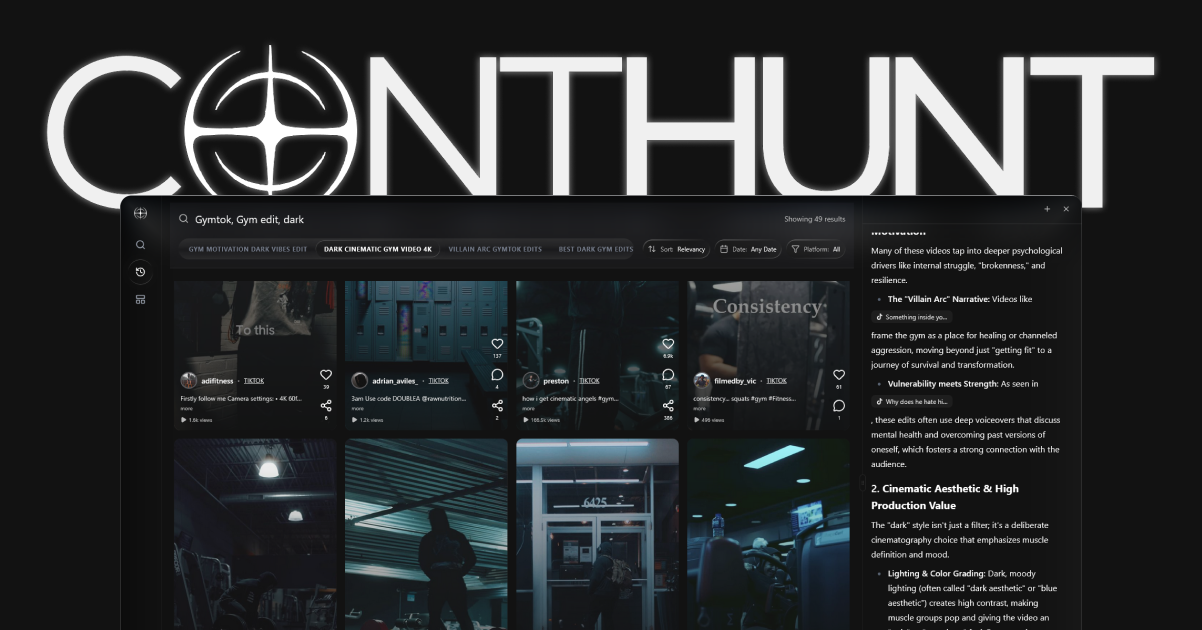
A **marketing competitor analysis** in 2026 is a 5-step process: (1) Identify your direct and indirect competitors, (2) Audit their content strategy (blog, video, social), (3) Reverse-engineer their SEO and keyword strategy, (4) Benchmark their social media engagement, and (5) Assess their paid advertising spend. The key shift in 2026 is moving from manual spreadsheets to **AI-powered competitive intelligence tools** like **ContHunt**, which automate hook tracking, node-alignment analysis, and relative benchmarking in real-time.
Marketing Competitor Analysis: How to Spy on & Outperform Your Rivals (2026)
Your competitors are publishing content right now. They are bidding on your brand keywords right now. They are testing new hooks, new formats, and new channels—all while you’re reading this sentence.
In 2026, marketing competitor analysis is not a “nice-to-have quarterly exercise.” It is the strategic foundation that separates brands that grow from brands that stagnate. The companies that systematically study their rivals’ marketing—content, SEO, social, and paid—consistently outperform those that operate in a vacuum.
This guide gives you the exact 5-step framework used by high-performing marketing teams in 2026. No fluff. No theory. Just a process you can run this afternoon.
Why Marketing Competitor Analysis Matters More in 2026
Three forces make competitor analysis indispensable this year:
- AI-Generated Content Flood: Every competitor can now produce 10x more content using AI. The question is no longer “who publishes more?” but “who publishes smarter?” Analysis tells you where their content is working.
- Algorithm Opacity: Google’s AI Overviews, TikTok’s Interest Graph, and Instagram’s Discovery Feed make it harder to predict what will rank. Studying what is working for competitors gives you reverse-engineered blueprints.
- Rising CAC: Customer Acquisition Costs have increased 60% since 2022. Every marketing dollar must be precision-targeted. Competitor analysis reveals where rivals are overspending and where gaps exist for you to dominate cheaply.
Step 1: Identify Your Competitors (The Right Ones)
Most teams make the mistake of analyzing only their obvious direct competitors. In 2026, you need three tiers:
Tier 1: Direct Competitors
Companies selling the same product to the same audience.
- How to find them: Search your core product keywords on Google. Who shows up in positions 1-10?
Tier 2: Indirect Competitors
Companies solving the same problem with a different product.
- How to find them: Ask your customers: “What would you use if we didn’t exist?” The answers will surprise you.
Tier 3: Aspirational Competitors
Companies in adjacent industries whose marketing you admire and want to emulate.
- How to find them: Use ContHunt’s “Discovery” mode. Search for companies in your broader category that are growing faster than average.
Pro Tip: Use our guide on How to Find Competitor Websites for a deeper dive into discovery methods.
Step 2: Audit Their Content Strategy
Content is the most visible and analyzable part of any competitor’s marketing. Here’s what to look for:
Blog Content Audit
| What to Analyze | What It Tells You | Tool |
|---|---|---|
| Top 10 posts by traffic | Their most successful topics | Ahrefs / SEMrush |
| Publishing frequency | Their resource investment | Manual count |
| Content format mix | Text vs. video vs. interactive | Manual audit |
| Content depth | Word count, detail level | Manual review |
| Update frequency | How often they refresh old content | Wayback Machine |
Video Content Audit
- Check their YouTube channel: Sort by “Most Popular” to see all-time winners.
- Check their TikTok/Instagram: Sort by most-engaged recent posts.
- Key Question: What format dominates? Tutorials? Listicles? Behind-the-scenes? Case studies?
Content Gap Analysis
This is the highest-ROI activity in competitor analysis. It answers: “What are they ranking for that I have NO content on?”
- Use ContHunt or SEO tools to compare your keyword footprint against each competitor.
- Flag every keyword where they rank in the top 20 and you have zero presence.
- Prioritize gaps by search volume and commercial intent.
Step 3: Reverse-Engineer Their SEO Strategy
Keyword Analysis
- Head Keywords: What are their top 10 highest-traffic keywords?
- Long-Tail Keywords: Where are they capturing niche, high-intent searches?
- Keyword Overlap: Which keywords do you both target? Who ranks higher and why?
Technical SEO Signals
- Site Speed: Is their site faster than yours? (Use PageSpeed Insights)
- Schema Markup: Are they using FAQ, HowTo, or Product schema to capture rich snippets?
- Internal Linking: How do they structure their content hubs?
Backlink Profile
- Who is linking to them that isn’t linking to you?
- Are there content partnerships, guest posts, or PR campaigns driving their authority?
Step 4: Benchmark Social Media Engagement
Raw follower counts are meaningless. In 2026, social analysis is about engagement quality and competitive velocity.
The Engagement Audit Framework
For each competitor, document:
- Engagement Rate: (Likes + Comments + Shares + Saves) / Reach
- Top 3 Posts (Last 30 Days): What format and topic drove the most engagement?
- Posting Cadence: How often do they post? Is there a pattern (e.g., educational Mon/Wed, entertaining Fri)?
- Hook Analysis: What are the opening lines of their best-performing posts? (ContHunt tracks this automatically)
- Community Response: How quickly and how thoughtfully do they respond to comments?
Platform-Specific Focus
- Instagram: Analyze Reels vs. Carousels vs. Stories performance.
- TikTok: Focus on shares and completion rate—the two strongest signals.
- LinkedIn: Dwell time and comment quality matter more than likes.
- YouTube: Average View Duration (AVD) is the king metric.
Recommended: Pair this with our Social Media Analysis Guide for a complete performance analysis framework.
Step 5: Assess Paid Advertising
Free Intelligence Sources
- Meta Ad Library: See every active Facebook and Instagram ad from any advertiser. Note their creative angles, offers, and landing pages.
- Google Ads Transparency Center: See which search ads competitors are running.
- TikTok Creative Center: Discover top-performing ad creatives by industry.
What to Look For
- Messaging Angles: Are they leading with price, features, social proof, or urgency?
- Offer Structure: Free trials, discounts, bundles, or content upgrades?
- Landing Page Strategy: Where do the ads send traffic? Product pages, lead magnets, or blog content?
- Ad Longevity: Ads that have been running for 30+ days are likely profitable. These are your strongest signals.
Using ContHunt for Automated Competitor Analysis
Manual analysis is powerful but time-consuming. ContHunt automates the most labor-intensive parts:
- Hook Intelligence: Automatically tracks the opening lines of competitor content to show you what’s stopping the scroll.
- Node-Alignment: Maps the “Interest Clusters” your competitors are expanding into, so you can get there first.
- Relative Benchmarking: Shows your engagement and reach metrics relative to your niche average—not just in isolation.
- Velocity Alerts: Get notified when a competitor publishes an outlier post (2x+ their average engagement).
See Also: 15 Best Competitor Analysis Tools for 2026 for a full tools comparison.
Free Competitor Analysis Template
Use this simple framework to document your findings:
Competitor Profile Card
Competitor Name: _______________
Website: _______________
Category: Direct / Indirect / Aspirational

CONTENT:
- Blog posts/month: ___
- Top 3 topics: ___
- Content format strength: ___

SEO:
- Estimated organic traffic: ___
- Top 3 keywords I don't rank for: ___
- Key content gap: ___

SOCIAL:
- Top platform: ___
- Engagement rate: ___
- Top hook style: ___

PAID:
- Active ad campaigns: Yes / No
- Primary messaging angle: ___
- Primary offer: ___

KEY INSIGHT: _______________
ACTION ITEM: _______________
Common Mistakes to Avoid
Mistake 1: Copying Instead of Analyzing
The goal is never to copy a competitor. It’s to understand why something works, then build a better version aligned with your brand.
Mistake 2: Analyzing Only Direct Competitors
Indirect and aspirational competitors often provide the most innovative marketing insights. Cast a wider net.
Mistake 3: One-Time Analysis
Markets move fast. A competitor analysis from 3 months ago is already outdated. Build a recurring monthly cadence.
Mistake 4: Data Without Action
Every insight must produce an action item. “Competitor X has strong video content” is useless. “Create 4 tutorial videos per month targeting [topic] to match Competitor X” is actionable.
2026 Marketing Competitor Analysis Checklist
- [ ] Have I identified 3-5 direct and 2-3 indirect competitors?
- [ ] Have I audited their content strategy (blog, video, social)?
- [ ] Have I performed a content gap analysis?
- [ ] Have I reverse-engineered their SEO keyword strategy?
- [ ] Have I benchmarked social media engagement rates?
- [ ] Have I reviewed their paid advertising in Meta Ad Library?
- [ ] Have I documented insights with action items?
- [ ] Have I set up ContHunt alerts for ongoing monitoring?
Conclusion
In 2026, marketing without competitor analysis is flying blind. The brands that win don’t just know their own numbers—they know everyone else’s too. Use this 5-step framework, automate the heavy lifting with ContHunt, and turn your competitors’ strengths into your strategic roadmap.
Recommended Next Steps:
Key Data Points
Revenue Impact
67%
Percentage of companies that report improved revenue after implementing systematic competitive intelligence programs.
Content Gap Value
3.2x ROI
Content created to fill gaps identified through competitor analysis generates 3.2x higher ROI than content created without competitive research.
AI Adoption
78%
Percentage of marketing teams using AI-powered tools for competitive analysis in 2026, up from 34% in 2024.
Expert Quotes
"Your competitors are not your enemy; they are your free research department. Every piece of content they publish is a hypothesis you can test, improve, and outrank."
"The best competitor analysis doesn't just tell you what rivals are doing—it tells you where they're going next."
Sources
- 2026 State of Competitive Intelligence · ContHunt Intelligence