Nirmal

What Makes a Video Viral: Data-Backed Analysis of Viral Content

viral-video-analysis content-intelligence algorithm-insights psychological-triggers short-form-strategy
What Makes a Video Viral: Data-Backed Analysis of Viral Content

What Makes a Video Viral: The Short Answer

After analyzing thousands of viral videos across TikTok, Instagram Reels, and YouTube Shorts, the answer is clear: viral videos trigger specific psychological responses that generate algorithm-boosting engagement signals.

What makes a video viral isn’t luck. It’s a predictable combination of:

  1. Pattern interrupts that stop the scroll
  2. Emotional triggers that compel sharing
  3. Retention mechanics that hold attention
  4. Timing factors that align with algorithm behavior
  5. Velocity signals that tell the algorithm to push wider

This guide breaks down exactly what makes a video viral, with real data and actionable frameworks you can apply today.


The Viral Equation: What Actually Matters

The Core Viral Formula

Viral Potential = (Hook Strength x Retention x Shareability) / Competition

Let’s unpack each element:

Factor What It Means Algorithm Impact
Hook Strength First 1-2 seconds capture attention Determines if video enters distribution pool
Retention Percentage of viewers who watch to end Strongest ranking signal across all platforms
Shareability Likelihood viewers will send to others Triggers exponential reach beyond followers
Competition Saturated topics vs. emerging niches Lower competition = faster viral velocity

Platforms may differ in interface, but they reward the same core behaviors: keeping people on the platform and making them share content that brings others in.


1. Psychological Triggers: What Makes People Share

The most underappreciated aspect of what makes a video viral is social psychology. People don’t share because content is “good” — they share because it makes them feel something specific.

The 5 Share-Triggers

Research into viral content reveals consistent psychological drivers:

1. Identity Signaling “I share this to say something about myself”

  • Niche humor (“this is so [my industry/interest]”)
  • Opinionated takes that signal values
  • “This is so me” relatable content

2. Social Currency “I share this to look smart/helpful/connected”

  • Insider information
  • Useful tips that save time/money
  • “Did you know?” factoids

3. Emotional Contagion “I share this because I feel something intense”

  • Surprise/shock (sudden reveals)
  • Warmth/inspiration (transformation stories)
  • Outrage/frustration (unfair situations)

4. Practical Utility “I share this to help someone specific”

  • How-to tutorials
  • Problem-solution formats
  • “Send this to [specific person]” CTAs

5. Conversation Starters “I share this to spark discussion”

  • Controversial opinions (mildly, not divisively)
  • Hot takes on trending topics
  • “Unpopular opinion” frames

Data Insight: Analysis of viral videos shows that content explicitly designed to be shared (“Send this to…”) generates 2-3x more share-to-view ratios than content without share prompts.

Writing Share Triggers Into Your Script

Don’t hope for shares — design them in:

BEFORE: "Here's a productivity tip I use..."
AFTER: "Send this to the friend who's always late..."

BEFORE: "This skincare routine works well..."
AFTER: "I wish someone told me this 3 years ago..."

The second version in each case creates an emotional hook and a clear action for the viewer.


2. The First 3 Seconds: What Makes Viewers Stop

What makes a video viral starts in frame one. The hook isn’t just “what you say” — it’s what the viewer experiences in the first second.

Hook Patterns That Consistently Work

After analyzing viral hooks across niches, clear patterns emerge:

Hook Type Example Template Why It Works
Contradiction “Stop doing X. Start doing Y instead.” Challenges existing beliefs
Curiosity Gap “The mistake 90% of people make with X…” Creates information gap
Specific Result “How I got 10K followers in 30 days…” Promises clear outcome
Pattern Interrupt Visual shock, sudden movement, unexpected audio Breaks viewing monotony
Relatable Pain “You know when X happens and you feel Y?” Immediate identification

The Visual Hook Checklist

What makes a video viral isn’t just words — visual composition matters:

  1. Movement in frame 1 — Static thumbnails get scrolled past
  2. Face or central subject — Humans are wired to look at faces
  3. High contrast or bright colors — Grayscale blends in
  4. Text overlay — Teases the value/tension immediately
  5. Unexpected element — Something that looks “wrong” or intriguing

Most creators fail here: They spend hours on content but lead with “Hey guys!” or logo animations. That’s dead air. Viral videos deliver a jolt within 0.5 seconds.


3. Retention Mechanics: What Keeps People Watching

Once you’ve stopped the scroll, what makes a video viral is your ability to hold attention through to the end.

Completion rate is arguably the strongest ranking signal across TikTok, Reels, and Shorts. When viewers watch all the way through, the algorithm pushes your content to more people.

The Pacing Problem

Research on viral video pacing reveals a clear pattern:

  • Optimal cut frequency: Every 1.5-2.5 seconds
  • Pattern interrupt: Visual change, zoom, caption shift, angle change
  • Dead air danger: Any pause longer than 1 second risks a scroll

Retention Boosters

What makes a video viral in terms of retention:

1. Earlier Payoff

SLOW: Setup (0:00-0:05) -> Context (0:05-0:10) -> Value (0:10+)
VIRAL: Tease value (0:00) -> Deliver (0:03) -> Expand (0:06+)

2. Visual Variety

  • Change angles every 2-3 cuts
  • Alternate between talking head and b-roll
  • Use text overlays to reinforce key points
  • Zoom in/out on emphasis

3. Narrative Tension

  • Open a loop (ask a question, tease a reveal)
  • Build toward resolution
  • Payoff before the end
  • Bonus twist in final seconds (encourages rewatch)

4. List Format Advantage List videos (“5 things that…”, “3 mistakes with…”) naturally improve retention because viewers want to see what’s next. They also create rewatch value as viewers check back for items they missed.


4. Rewatch Value: The Viral Multiplier

What truly makes a video viral is rewatch potential. Every rewatch compounds your watch time without requiring new viewers — the algorithm loves this.

Engineering Rewatches

Viral videos are designed to be watched more than once:

Rewatch Trigger Example Why It Works
Information Density Fast lists, multiple tips Viewers miss details and rewatch to catch them
Visual Easter Eggs “Watch the background…” Creates search behavior within the video
Loop Edits Ending connects seamlessly to start Infinite viewing experience
Layered Humor Jokes within jokes New details discovered on repeat views
A/B Comparisons Before/after, spot the difference Viewers toggle back and forth mentally

The Loop Technique

TikTok popularized the loop video for a reason — videos that seamlessly replay generate massive watch time from a single viewer.

How to create loopable content:

  • End with a question that references the beginning
  • Visually match the final frame to the opening frame
  • Use circular narratives (the end becomes a new beginning)

Example: “Here’s the mistake I made… [demonstrates mistake]… and that’s why you should never do [mistake].” The warning at the end loops back to the demonstration.


5. Timing Factors: When Viral Content Spreads

What makes a video viral isn’t just the content itself — it’s when that content hits the platform.

Platform-Specific Peak Times

Data on viral posting times reveals patterns (though these vary by audience):

Platform Peak Engagement Window Why
TikTok 6-9 AM, 7-11 PM Commute and evening downtime
Instagram Reels 11 AM-2 PM, 7-10 PM Lunch break and evening
YouTube Shorts 2-4 PM, 7-10 PM Afternoon and evening browsing

The Velocity Window

What separates viral videos from merely successful ones is velocity — how fast they accumulate views in the first hour.

Algorithm testing windows:

  • Critical hour: First 60 minutes post-publish
  • Extension period: Hours 1-6
  • Stabilization: After 24 hours

If a video outperforms your baseline significantly in the first hour, the algorithm pushes it to wider pools. This is why consistent posting matters — you need enough data to know your baseline.

ContHunt’s Velocity Metrics track exactly this signal, identifying videos growing faster than a creator’s average. This helps you spot what’s working before it’s obvious in your dashboard.


6. Platform Algorithm Differences

While what makes a video viral has common elements, each platform weighs signals differently.

TikTok: The Watch Time King

TikTok’s algorithm is transparent about its priorities:

  1. Watch time/completion is the #1 signal
  2. Rewatches are heavily weighted
  3. Shares drive distribution to new audiences
  4. Comments indicate engagement (but matter less than watch time)

Viral strategy: Focus on loops and dense information that rewards multiple views.

Instagram Reels: The Share Engine

Instagram emphasizes:

  1. Sends/shares to DMs (unique to IG)
  2. Watch time (especially for non-followers)
  3. Saves as a strong signal of value
  4. Engagement rate relative to your follower count

Viral strategy: Create “send this to…” content that triggers direct sharing.

YouTube Shorts: The Retention Game

YouTube Shorts prioritizes:

  1. Average view duration (how long people watch)
  2. Swipe rate (how quickly people scroll past)
  3. Subscriber conversion (does it generate follows?)
  4. Click-through to long-form (ecosystem value)

Viral strategy: Front-load value and create clear reasons to subscribe.


7. Data-Backed Viral Characteristics

Analysis of videos with 1M+ views reveals consistent traits:

Length Distribution

Duration Viral Hit Rate Best For
7-15 seconds Highest Quick tips, jokes, visual gags
15-30 seconds High Tutorials, storytelling, explanations
30-60 seconds Medium Deep value, multi-step content
60+ seconds Lowest Requires exceptional hook and retention

Content Categories with Highest Viral Potential

Data shows certain formats consistently outperform:

  1. Transformation reveals — Before/after, problem/solution
  2. Insider secrets — “What they don’t tell you about…”
  3. Relatable struggles — “POV: when you’re [situation]”
  4. Unexpected expertise — Surprising knowledge from unexpected sources
  5. Trend hacking — Applying trending formats to new niches

The Viral Multiplier Effect

What makes a video truly viral (not just successful) is the multiplier — shares generating new viewers who then share, creating exponential growth.

Viral thresholds by platform:

  • TikTok: 100K+ views indicates viral potential
  • Instagram Reels: 50K+ views on non-creator accounts
  • YouTube Shorts: 100K+ views for smaller channels

Beyond these numbers, the algorithm shifts from “testing” to “amplifying” — pushing content to increasingly wide audience pools.


8. What Makes a Video Viral: A Framework

Here’s a practical framework to evaluate viral potential before you post:

The Viral Scorecard

Score each element 1-5. Total 25+ = strong viral potential.

Element 1 (Weak) 3 (Average) 5 (Strong)
Hook Generic intro Clear topic Immediate pattern interrupt
Emotion Neutral Mild interest Strong feeling (surprise, warmth, etc.)
Retention Lots of filler Some pacing Tight editing, no dead air
Shareability No clear reason Possibly useful “Must show someone” trigger
Timing Saturation Neutral timing Emerging trend/low competition

Pre-Publish Checklist

Before hitting post, ask:

  1. Would a stranger stop scrolling in 1 second?
  2. Is there a clear emotional trigger or share reason?
  3. Does every second earn its place (no dead air)?
  4. Is there something worth rewatching for?
  5. Am I posting when my audience is active?
  6. Does this align with a trending topic or format?

If you can’t answer these clearly, keep refining.


9. The Viral Analysis Workflow: How to Study What Works

Understanding what makes a video viral requires studying successful content systematically. Here’s a workflow:

Step 1: Identify Viral Patterns in Your Niche

Don’t just watch — analyze:

  • What hooks are top creators using?
  • What topics are trending right now?
  • What formats are getting engagement?
  • Which niches are underserved?

Step 2: Reverse-Engineer the Mechanics

For each viral video, identify:

  • Hook type: Curiosity? Contradiction? Result?
  • Emotional trigger: What does it make viewers feel?
  • Share reason: Why would someone send this?
  • Pacing: How often are there visual changes?
  • Structure: How is the information organized?

Step 3: Extract Repeatable Frameworks

Turn one viral video into multiple content pieces:

  • Adapt the hook to your niche
  • Keep the structure, swap the topic
  • Apply the emotional trigger to different subjects
  • Use the pacing as a template

Step 4: Iterate Based on Performance

Track what works and double down:

  • Which hooks get the best retention?
  • What topics generate the most shares?
  • When do you get the best velocity?
  • What formats resonate with your audience?

10. Common Viral Video Myths

Let’s clear up misconceptions about what makes a video viral:

Myth 1: “Viral is random luck”

Reality: Viral videos follow predictable patterns. Luck favors the prepared — and the prolific.

Myth 2: “You need high production value”

Reality: Many viral videos are lo-fi. Authenticity often outperforms polish.

Myth 3: “Post at the exact right time or it won’t work”

Reality: Timing matters, but content quality matters more. Good content can go viral anytime.

Myth 4: “Viral videos are always funny”

Reality: Entertainment is just one path. Value, inspiration, and information all go viral.

Myth 5: “Once viral, always viral”

Reality: Past success doesn’t guarantee future hits. Consistency beats one-hit wonders.


How ContHunt Helps You Create Viral Content

Understanding what makes a video viral is one thing. Finding those opportunities at scale is another.

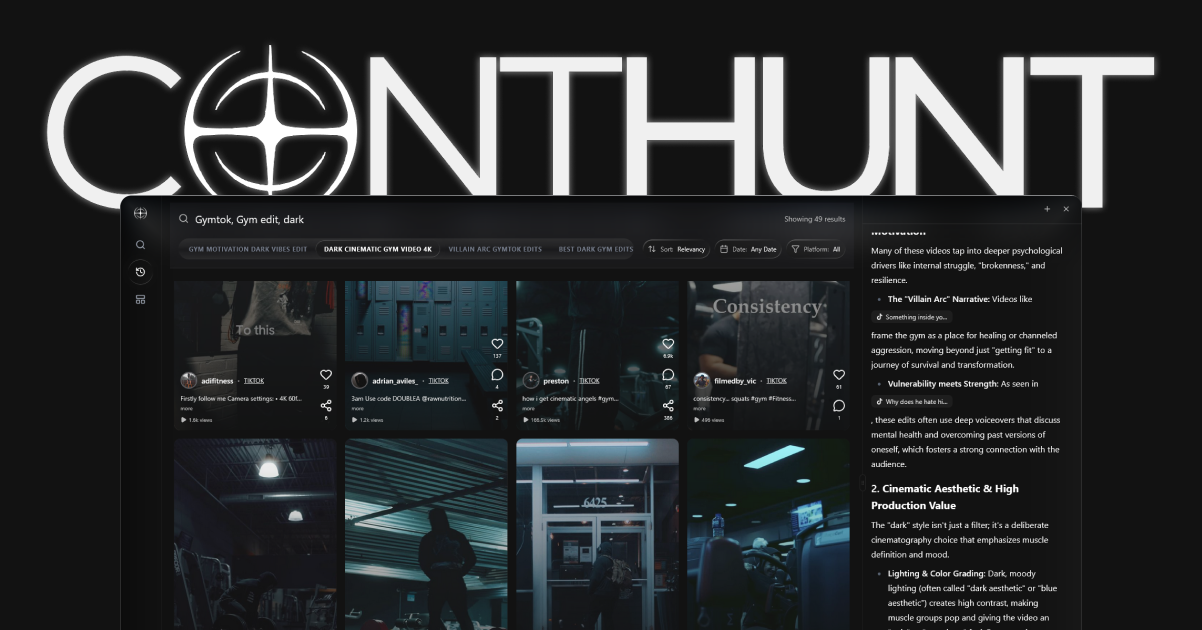
ContHunt’s content intelligence platform automates viral pattern discovery:

  • Multi-Platform Aggregation — Scan TikTok, Reels, and Shorts simultaneously to spot cross-platform patterns before they saturate
  • Velocity Metrics — Identify videos growing faster than baseline, catching rising trends early
  • Deep Research Agent — Frame-by-frame analysis of hooks, pacing, and structure to extract repeatable mechanics
  • Niche Hunter — Find low-competition topics with high viral potential
  • Pattern Extraction — Turn one winning video into 20 variations with different angles, hooks, and CTAs

Instead of spending hours doom-scrolling for inspiration, you get a focused feed of proven viral patterns you can adapt to your niche.

View Demo to see ContHunt in action


Bottom Line: What Makes a Video Viral

Viral videos aren’t magic. They’re engineered content that triggers specific psychological responses and generates strong algorithm signals.

The viral formula:

  1. Stop the scroll with a pattern-interrupting hook
  2. Hold attention with tight pacing and visual variety
  3. Trigger emotion that compels sharing
  4. Design rewatchability into the structure
  5. Time it right for algorithm amplification
  6. Iterate fast based on performance data

Most importantly: consistency beats luck. The more you publish with these principles in mind, the more data you get, and the faster you’ll find what works for your specific audience and niche.

Ready to stop guessing and start engineering viral content? Start analyzing viral patterns with ContHunt.

Explore more insights

VIEW ALL POSTS