Nirmal

TikTok Shop Marketing Strategy Guide: Complete Ecommerce Playbook

tiktok-shop ecommerce social-commerce marketing-strategy creator-economy
TikTok Shop Marketing Strategy Guide: Complete Ecommerce Playbook

Why TikTok Shop marketing matters in 2026

The days of “see it, search for it, buy it” are over. TikTok Shop has collapsed the customer journey into a single tap.

Smart brands aren’t just treating TikTok as a brand awareness channel anymore. They’re building complete tiktok shop marketing strategy frameworks that turn viewers into buyers without leaving the app.

The numbers back this up: TikTok Shop users spend 3x more time browsing products than traditional social commerce platforms, and the conversion rate from shoppable content is 2-3x higher than standard social media ads.

This guide covers everything you need to build a winning TikTok Shop marketing strategy: from product research and competitive analysis to ad optimization and creator collaboration.

Quick overview: The TikTok Shop marketing framework

Before diving into specifics, here’s the complete framework for a successful TikTok Shop marketing strategy:

Product Research -> Content Strategy -> Creator Partnerships -> Paid Amplification -> Analytics & Optimization

Each pillar feeds into the next. Skip one, and your results suffer.

Pillar What It Covers Why It Matters
Product Research Finding winning products with viral potential 40% of TikTok Shop success is product selection
Content Strategy Shoppable content formats that convert Native content outperforms repurposed ads by 3x
Creator Partnerships Affiliate and influencer collaborations Creator-driven content generates 2.5x more engagement
Paid Amplification TikTok Shop ads and Spark Ads Paid + organic creates a viral feedback loop
Analytics Performance tracking and optimization Data-driven decisions scale what works

Step 1: Product research for TikTok Shop

The foundation of any effective TikTok Shop marketing strategy is choosing products that align with how people discover content on the platform.

What products work on TikTok Shop

Not every product belongs on TikTok. The platform rewards products that:

1. Solve a visible problem

  • Cleaning hacks that show dramatic before/after
  • Beauty products with visible transformations
  • Kitchen gadgets that solve common frustrations
  • Tech accessories that demonstrate clear utility

2. Have visual “wow” factor

  • Satisfying textures and ASMR potential
  • Unexpected features or mechanisms
  • Color or design that pops on camera
  • Movement or interaction that’s fun to watch

3. Fit impulse purchase patterns

  • Price points under $50 convert best
  • Clear value in under 15 seconds
  • “Why didn’t I think of that?” factor
  • Gift-ability for friends/partners

4. Target Gen Z and Millennial demographics

  • Aesthetic-driven purchases
  • Trend-conscious categories (beauty, fashion, home decor)
  • Sustainable and values-based products
  • Nostalgia or irony-adjacent items

Product research methods

Method 1: Analyze viral product content

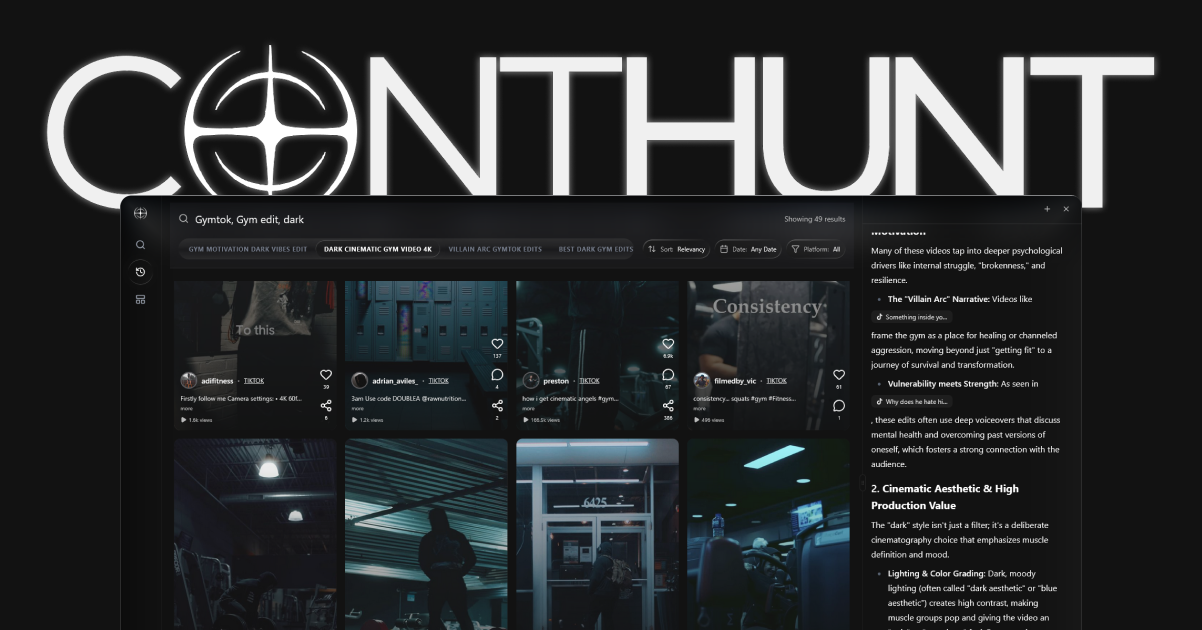
Use ContHunt to scan TikTok for product-related viral patterns:

  • Search for your product category and filter by high-engagement videos
  • Identify which product features get highlighted most often
  • Note the price points, hooks, and content formats that work
  • Find gaps — products with high search but low content supply

Method 2: Cross-platform trend scanning

Trends often start on one platform and migrate to others:

  • Monitor trending products on Instagram Reels and YouTube Shorts
  • Check Amazon Movers and Shakers for rising product categories
  • Scan Pinterest for emerging product trends
  • Use TikTok Creative Center to see what’s trending in your niche

Method 3: Competitor product analysis

Study successful TikTok Shop sellers:

  • Which products are they promoting most aggressively?
  • What’s their price strategy?
  • How are they positioning products vs. traditional e-commerce?
  • What content formats are they using for each product type?

The product scoring framework

Before committing inventory, score each product:

Criteria 1-5 Scale Weight
Visual Demonstration Potential How easy is it to show value on video? 25%
Impulse Purchase Factor Would someone buy this after 15 seconds? 25%
Viral Shareability Would people share this with friends? 20%
Market Saturation How many similar products exist? 15%
Profit Margin Can you afford TikTok’s commissions + ads? 15%

Score 20+ = Proceed with confidence. Score 15-19 = Test with limited inventory. Score under 15 = Pass.

Step 2: Content strategy for shoppable posts

Once you have winning products, your content strategy determines whether they convert. TikTok Shop marketing succeeds with authentic, native-feeling content—not repurposed commercials.

Content formats that drive sales

1. The Problem-Solution Hook

Open with a relatable problem, demonstrate your product as the solution:

Structure:
0:00-0:03: "You know when [pain point]?"
0:03-0:08: Show the problem visually
0:08-0:12: Reveal product as solution
0:12-end: Demonstrate results + CTA to shop

Example: “You know when your phone dies at 2 PM and you’re nowhere near an outlet?” [shows dead phone] [reveals compact power bank] “This thing fits in my wallet and charges my phone 3 times. Link in shop.”

2. The “How Did I Live Without This” Frame

Position your product as a discovery that improved your life:

Structure:
0:00-0:02: "I wish I found this sooner" hook
0:02-0:10: Show life before the product
0:10-0:20: Demonstrate product benefits
0:20-end: Transformation reveal + shop link

3. The Unboxing Experience

TikTok loves unboxing content when it feels authentic:

  • Show genuine reactions, not staged excitement
  • Highlight unique features as you discover them
  • Demonstrate immediately after unboxing
  • Include price or “deal” context (“This was $X, worth it?”)

4. The Usable Content-First Approach

Lead with value, promote product second:

  • “3 ways to [achieve result]… #2 is my favorite” (product is #2)
  • “POV: you finally found [solution]” (product reveal as POV punchline)
  • Tutorial content where product is the tool that makes it easy

Content production best practices

Hook optimization:

  • Front-load the product benefit in first 2 seconds
  • Use text overlays to reinforce value proposition
  • Show the product in use immediately, don’t tease
  • Include price if it’s a competitive advantage

Authenticity over production:

  • Shot on phone > studio production
  • Real user testimonials > actor scripts
  • Messy room/real environment > fake set
  • One-take authenticity > heavily edited

Call-to-action strategy:

  • Soft CTAs (“Link’s in my shop” or “Check the shop”)
  • Hard CTAs (“This deal ends tonight” or “Only 50 left”)
  • FOMO framing (“Restocking soon” or “Selling out fast”)
  • Limited-time offers create urgency

Posting frequency and timing

For TikTok Shop success:

  • Minimum 3 posts per day per product
  • Peak times: 7-9 AM, 12-2 PM, 7-10 PM (adjust to your audience)
  • Test 6-10 variations of each product to find winning angles
  • Recycle top performers with new hooks after 2-3 weeks

Step 3: Creator partnerships and affiliate marketing

Creator partnerships are the engine of most successful TikTok Shop marketing strategies. The platform is built on creator authenticity, and products perform better when recommended by trusted voices.

Finding the right creators

Don’t just look at follower count. Focus on:

Metric What to Look For Why It Matters
Engagement Rate 5%+ on product-related content Shows audience trusts recommendations
Niche Alignment Content matches your product category Targeted audience = higher conversion
Authenticity Score Mix of sponsored and organic content Audiences reject purely promotional accounts
Demographic Match Follower age/location matches your target Relevance drives purchase intent
Video Style Natural, native-feeling content style Blends in with their feed = less ad resistance

Where to find creators:

  • TikTok Creative Center — official creator marketplace
  • Competitor analysis — see who’s promoting similar products
  • Hashtag search — find creators in your niche
  • ContHunt’s competitor analysis — identify high-performing creators in your category

Partnership models

1. Affiliate Commission Model

Creator earns percentage of each sale:

  • Standard rates: 10-20% commission
  • Higher rates (20-30%) for exclusive launches
  • Performance bonuses for hitting sales milestones
  • Provide unique discount codes to track conversions

Pros: Low upfront cost, performance-based Cons: Harder to attract top creators without guaranteed income

2. Flat Fee + Commission

Hybrid model:

  • Guaranteed payment for content creation
  • Additional commission on sales
  • Typical: $100-500 per video + 10-15% commission

Pros: Attracts better talent, shared risk Cons: Higher upfront investment

3. Product Seeding

Send free product in exchange for content:

  • Low cost for entry-level creators
  • No guarantee of posting or quality
  • Works best with products under $50 value

4. Long-term Ambassador Programs

Ongoing partnership:

  • Monthly retainer or per-post rate
  • Exclusive product access
  • Co-branded content opportunities
  • Input on product development

Creator collaboration best practices

Give creative freedom:

  • Provide key product benefits, not scripts
  • Share what’s worked in your own content
  • Let creators adapt to their voice and audience
  • Approve content before posting, but don’t over-edit

Provide assets and support:

  • High-quality product photos and b-roll
  • Key selling points and competitive advantages
  • Discount codes and offer details
  • Timely responses to questions and requests

Track and optimize:

  • Assign unique codes to each creator
  • Monitor which creative approaches convert best
  • Reinvest in top-performing partnerships
  • Share performance data with creators

Step 4: TikTok Shop advertising strategy

Organic content drives discovery, but paid amplification scales what works. A complete TikTok Shop marketing strategy leverages both.

TikTok Shop ad formats

1. Shopping Ads

Automatically promoted from your catalog:

  • Product catalog synced to TikTok
  • Dynamic product ads based on user behavior
  • Appears as “Sponsored” in For You feed
  • Easy setup, automated optimization

2. Spark Ads (Best for conversion)

Amplify existing organic content:

  • Boost high-performing organic posts
  • Maintains authentic feel
  • Shows creator handle (if creator content)
  • Higher engagement than traditional ads

3. Collection Ads

Showcase multiple products:

  • Immersive, full-screen experience
  • Tap to shop individual products
  • Works for product lines and bundles
  • Higher AOV potential

4. Live Shopping Ads

Promote live shopping events:

  • Drive viewers to live streams
  • Real-time product demonstrations
  • Limited-time offers create urgency
  • Interactive Q&A builds trust

Ad optimization strategies

Targeting approach:

  • Start with broad targeting (age 18-34, interest-based)
  • Let TikTok’s algorithm find converters
  • Retarget website visitors and product page viewers
  • Create lookalike audiences from purchasers

Creative optimization:

  • Test 5-10 variations per product
  • Front-load product benefit and price
  • Use native-style content over polished ads
  • Include clear “Shop Now” CTAs

Budget allocation:

  • Phase 1 (Testing): $50-100/day across multiple creatives
  • Phase 2 (Scaling): Double down on winning ads, $200-500/day
  • Phase 3 (Optimization): 70% to winners, 30% to new tests

Key metrics to track:

  • ROAS (Return on Ad Spend): Target 2-3x minimum
  • CPA (Cost Per Acquisition): Must be below your margin
  • CTR (Click-Through Rate): Benchmark 1-3%
  • Conversion Rate: Benchmark 2-5% from click to purchase

The organic + paid feedback loop

The most effective TikTok Shop marketing strategy:

  1. Launch products organically — Test products and content angles
  2. Identify winning content — Look for high engagement and sales
  3. Amplify with Spark Ads — Put money behind what’s already working
  4. Create variations - Use winning hooks and formats for new products
  5. Scale spend — Increase budget on proven winners

This approach minimizes wasted ad spend and maximizes ROI.

Step 5: Analytics and optimization

Data is what separates successful TikTok Shop sellers from those who burn cash.

Key TikTok Shop metrics to track

Product-level metrics:

  • Gross Merchandise Value (GMV)
  • Units sold per product
  • Conversion rate by product
  • Return rate (high returns indicate product or content issues)

Content-level metrics:

  • Views, engagement rate, share rate
  • Click-through to product page
  • Add-to-cart rate
  • Conversion from content

Creator-level metrics:

  • Sales generated per creator
  • ROAS by creator partnership
  • Audience overlap and new customer acquisition
  • Content performance vs. cost

Ad-level metrics:

  • Impressions, CTR, CPC
  • ROAS by campaign and creative
  • Frequency and fatigue metrics
  • Attribution windows (view-through vs click-through)

Optimization framework

Weekly review (30 minutes):

  1. Identify top 3 performing products and content
  2. Note common elements (hook, price, creator, format)
  3. Pause underperforming ads
  4. Plan next week’s content based on wins

Monthly deep-dive (1 hour):

  1. Analyze customer acquisition cost by channel
  2. Identify highest-value customer segments
  3. Review creator partnership performance
  4. Adjust product mix and pricing strategy

Using ContHunt for TikTok Shop competitive intelligence

TikTok’s native analytics only show your own data. To win, you need visibility into what’s working across the platform.

ContHunt helps TikTok Shop sellers:

  • Analyze viral product content in your niche to identify winning formats
  • Track competitor product launches and their performance signals
  • Identify high-performing creators before everyone else discovers them
  • Extract content patterns that drive sales, not just views
  • Monitor emerging trends in product categories before they saturate

Instead of guessing what products will sell, use data to spot opportunities before your competitors.

Common TikTok Shop mistakes to avoid

Mistake 1: Repurposing ads as organic content TikTok users can smell commercials from frame one. Native, authentic content outperforms repurposed ads by 3x.

Mistake 2: Ignoring product-market fit Not every product works on TikTok. Focus on visually demonstrable products with impulse appeal.

Mistake 3: Over-reliance on one creator Diversify your creator partnerships. If one creator leaves or underperforms, you have backup.

Mistake 4: Setting and forgetting ads TikTok ad fatigue is real. Constantly test new creative and refresh top performers.

Mistake 5: Neglecting post-purchase experience Viral products with bad reviews die fast. Invest in fulfillment speed and product quality.

TikTok Shop marketing strategy checklist

Use this checklist to launch or optimize your TikTok Shop presence:

Product Readiness

  • [ ] Products have strong visual demonstration potential
  • [ ] Price points under $50 (or clear justification for premium)
  • [ ] Unique selling proposition vs. competitors
  • [ ] Sufficient margin for commissions, fees, and ads

Content Strategy

  • [ ] 5-10 content variations per product tested
  • [ ] Mix of problem-solution, unboxing, and value-first formats
  • [ ] Front-loaded hooks with clear product benefits
  • [ ] Posting schedule of 3+ times per day

Creator Partnerships

  • [ ] Identified 10+ creators in your niche
  • [ ] Partnership model defined (affiliate, fee, hybrid)
  • [ ] Clear brief with product benefits and creative freedom
  • [ ] Unique tracking codes for each creator

Paid Strategy

  • [ ] Product catalog synced to TikTok Shop
  • [ ] Spark Ads identified from top organic performers
  • [ ] Budget allocated for testing ($50-100/day minimum)
  • [ ] Targeting and tracking setup properly

Analytics Setup

  • [ ] TikTok Shop pixel installed and tested
  • [ ] Key metrics dashboard created
  • [ ] Weekly and monthly review calendar set
  • [ ] Competitive intelligence tool (ContHunt) configured

Start scaling your TikTok Shop

The brands winning on TikTok Shop aren’t luckier—they’re more strategic. They understand that success requires a complete marketing framework: product research, authentic content, creator partnerships, smart ad spend, and continuous optimization.

The platform is still young. First-movers who build genuine relationships with creators and audiences now will have advantages as TikTok Shop matures.

Ready to identify winning products and content patterns before your competitors?

Start analyzing viral TikTok Shop content with ContHunt

Explore more insights

VIEW ALL POSTS