Nirmal

How to Identify Market Trends: The Complete Guide to Trend Scouting

market-trends trend-scouting content-intelligence competitive-analysis business-strategy
How to Identify Market Trends: The Complete Guide to Trend Scouting

How to Identify Market Trends: The Short Answer

Identifying market trends is the systematic process of spotting emerging patterns in consumer behavior, content consumption, and market dynamics before they become obvious to competitors.

The most effective approach combines:

  1. Velocity monitoring — Tracking how fast topics are growing relative to baseline
  2. Cross-platform analysis — Identifying patterns that emerge across multiple channels
  3. Competitive intelligence — Seeing what successful players are investing in
  4. Social signal detection — Monitoring engagement shifts and conversation themes
  5. Data-driven validation — Using metrics to distinguish trends from fads

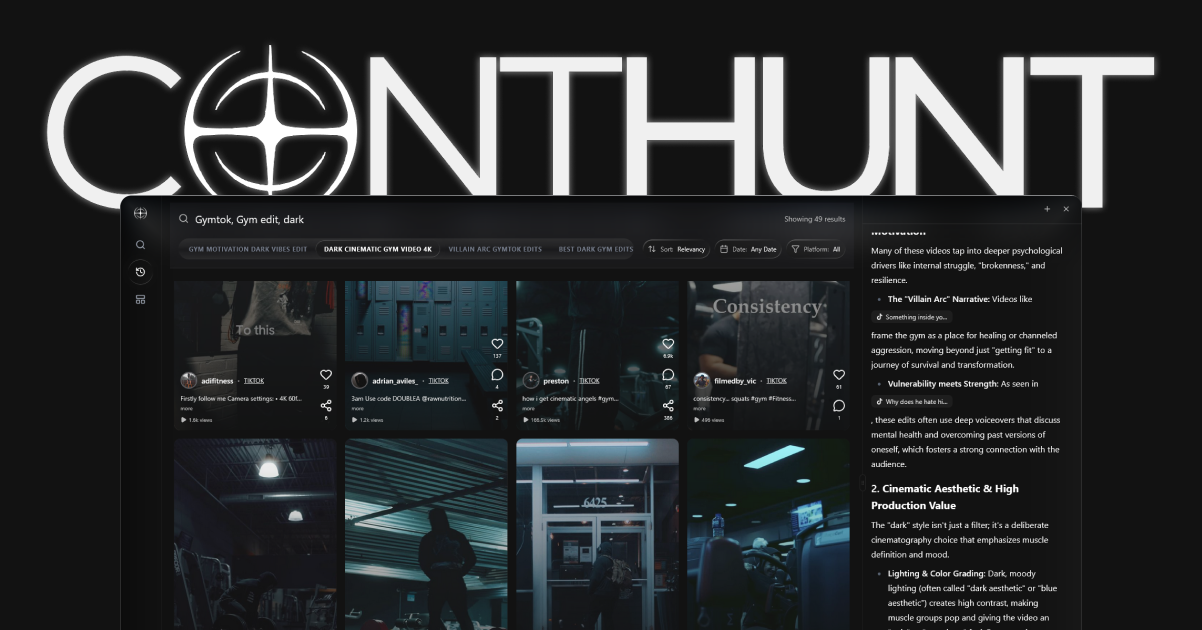
This guide shows you exactly how to identify market trends with practical strategies you can implement immediately, plus how tools like ContHunt automate much of this process.


Why Market Trend Identification Matters

The difference between catching a wave early and chasing it after it’s broken is massive.

First-mover advantages in trend identification:

  • Lower customer acquisition costs — Less competition for attention
  • Brand authority — Establish ownership before saturation
  • Premium pricing — Early entrants command higher margins
  • Platform algorithm boost — Algorithms favor fresh, emerging content

Real-world example: Brands that identified the short-form video trend in 2020 (TikTok, Reels, Shorts) built audiences at a fraction of today’s costs. Late entrants now pay 3-5x more for the same reach.

The challenge isn’t finding trends — it’s finding them early enough to matter.


The 3 Types of Market Trends

Not all trends are created equal. Understanding which type you’re dealing with determines your strategy.

1. Emerging Trends (The Gold Mine)

Characteristics:

  • Growing faster than baseline but not yet saturated
  • Low competition in search and social
  • Early adopter engagement is strong
  • Mainstream awareness is low

Opportunity window: 3-6 months before mainstream saturation

Strategy: Create content, products, or services immediately. Establish ownership.

2. Peak Trends (The Danger Zone)

Characteristics:

  • Everyone is talking about it
  • Competition is fierce
  • Customer acquisition costs are rising
  • Content is commoditized

Opportunity window: Closing fast, unless you have a unique angle

Strategy: Only enter if you have a clear differentiation or can improve on existing offerings.

3. Declining Trends (The Time Sink)

Characteristics:

  • Engagement is dropping
  • Early adopters have moved on
  • Only latecomers remain active

Opportunity window: Closed

Strategy: Avoid investing resources. Let competitors waste their budgets.

Key Insight: The most profitable trends are identified in the “emerging” phase — when growth velocity is accelerating but competition remains low. This is exactly what ContHunt’s velocity metrics are designed to detect.


Method 1: Velocity-Based Trend Detection

The most reliable way to identify market trends is monitoring velocity — how fast something is growing relative to its historical baseline.

What Is Velocity?

Velocity measures the rate of change in engagement, searches, or content creation around a topic.

High velocity indicators:

  • Search volume increasing 50%+ month-over-month
  • Content creation rate accelerating (more videos/posts on the topic)
  • Engagement rates above category average
  • Cross-platform emergence (appearing on TikTok, then Reels, then Shorts)

How to Track Velocity Manually

For content trends:

  1. Identify 10-20 key topics in your niche
  2. Track how much content is created for each topic weekly
  3. Note which topics show accelerating content volume
  4. Cross-reference with engagement metrics (views, shares, saves)

For search trends:

  1. Use Google Trends to compare search interest over time
  2. Look for “breakout” terms (searches that have grown 5000%+)
  3. Filter by your region and category
  4. Set up alerts for your core keywords

For social trends:

  1. Monitor hashtag usage volume on TikTok and Instagram
  2. Track sound/audio trend adoption rates
  3. Note which formats top creators are adopting
  4. Watch for format migration (TikTok to Reels to Shorts)

The Velocity Advantage

Velocity-based trend detection works because:

  • It’s objective — Numbers don’t lie about what’s growing
  • It’s early — Velocity increases before mainstream awareness
  • It’s actionable — You can quantify the opportunity

ContHunt’s Velocity Metrics automatically track content velocity across TikTok, Reels, and Shorts, flagging topics growing faster than baseline so you can spot emerging trends before competitors.


Method 2: Cross-Platform Pattern Recognition

Trends today rarely stay on one platform. The strongest trends migrate across platforms, and identifying this migration pattern is a powerful trend identification strategy.

The Platform Migration Pattern

Typical trend lifecycle:

  1. TikTok emergence — New format or topic gains traction
  2. Instagram Reels adoption — Creators adapt the format
  3. YouTube Shorts expansion — Format reaches broader audience
  4. Main media pickup — Traditional media covers the trend

Why this matters: Each stage represents an opportunity window. Early adopters on TikTok capture the lowest-cost attention. Smart brands catch trends during the Reels migration phase.

How to Implement Cross-Platform Monitoring

Step 1: Establish topic baselines

  • Identify 20-30 core topics in your niche
  • Document current content volume for each platform
  • Note typical engagement rates per platform

Step 2: Set up monitoring

  • Weekly check of trending hashtags per platform
  • Track top creators in your niche across platforms
  • Monitor sound/audio trend migration
  • Watch for format adaptation (e.g., a specific video structure)

Step 3: Look for migration signals

  • Topic growing on TikTok but dormant on Reels? Migration likely
  • Format popular among micro-creators? Macro adoption coming
  • Sound trending in one country? Global spread imminent

Cross-Platform Analysis Framework

Signal TikTok Instagram Reels YouTube Shorts Action
Emerging Accelerating Low activity Low activity Create content now
Migrating High volume Starting to grow Low activity Expand to Reels
Saturated High volume High volume Starting to grow Unique angle only
Universal High volume High volume High volume Differentiate or skip

ContHunt Advantage: Instead of manually checking three platforms, ContHunt aggregates data across TikTok, Reels, and Shorts, highlighting topics that are emerging on one platform and ripe for migration to others.


Method 3: Competitive Intelligence

Your competitors are doing trend research. Why not benefit from their investment?

What Competitors Reveal About Trends

Competitors show you what they believe will matter through their actions:

Content signals:

  • Topics they’re creating content around
  • Formats they’re adopting
  • Keywords they’re targeting
  • Influencers they’re partnering with

Product signals:

  • New product launches
  • Feature additions
  • Pricing changes
  • Marketing copy shifts

Resource allocation:

  • Hiring trends (new roles signal new priorities)
  • Budget allocation (ad spend by topic/format)
  • Strategic partnerships

How to Monitor Competitors for Trend Signals

Content Analysis:

  1. Identify 5-10 key competitors
  2. Track their content themes weekly
  3. Note format adoption (new video styles, hooks, structures)
  4. Monitor engagement shifts (what’s working for them now vs. 3 months ago)

Messaging Analysis:

  1. Review homepage and landing pages monthly
  2. Track email subject lines and themes
  3. Monitor ad copy across channels
  4. Note positioning shifts

Hiring Analysis:

  1. Follow competitors on LinkedIn
  2. Monitor job postings for new roles
  3. Note new skill requirements
  4. Track department expansions

Social Listening:

  1. Set up alerts for competitor brand mentions
  2. Monitor customer feedback and complaints
  3. Track influencer partnerships
  4. Note user-generated content themes

The Second-Mover Advantage

Being first isn’t always best. Letting competitors test trends has advantages:

  • Validated demand — Competitors proved people care
  • Visible execution — You see what works and what doesn’t
  • Improvement opportunities — Competitors reveal gaps
  • Timing insight — You see the true opportunity window

ContHunt’s Competitive Analysis tracks competitor content performance without following them, revealing which topics and formats are driving engagement in your niche.


Method 4: Social Signal Detection

Social platforms are real-time trend laboratories. The key is extracting signal from noise.

The Noise Problem

Scrolling social media for trends is inefficient because:

  • Volume overload — Too much content to process manually
  • Echo chambers — Algorithms show you what you already like
  • False signals — Virality doesn’t always equal a sustainable trend
  • Time delay — By the time you see it, early adopters have moved on

Social Signal Sources That Matter

Instead of passive scrolling, focus on these high-signal sources:

1. Creator Migration Patterns When top creators in your niche shift formats or topics, pay attention. They’re often the first to test new approaches because their livelihood depends on staying ahead.

What to track:

  • Which hooks are top creators using this week vs. last week?
  • What topics are they covering that they weren’t a month ago?
  • Which formats are they experimenting with?

2. Sound and Music Trends Audio trends are a leading indicator of content trends, especially on TikTok and Reels.

What to track:

  • Trending sounds in your niche (not just overall)
  • Sound migration from one niche to another
  • Music trends among Gen Z audiences

3. Engagement Pattern Shifts When engagement patterns change, it often signals a trend shift.

What to track:

  • Which topics generate above-average shares vs. likes?
  • What content formats have the highest completion rates?
  • Which hooks generate the most comments?

4. Comment and Sentiment Analysis Comments reveal what audiences actually care about.

What to track:

  • Common questions and pain points
  • Feature requests and complaints
  • Topics that generate passionate discussion

Social Listening Tools vs. Manual Monitoring

Approach Pros Cons
Manual monitoring Free, nuanced understanding Time-consuming, limited scale
Social listening tools Automated, scalable Can miss context, expensive
Content intelligence Both automated and contextual Requires platform investment

ContHunt’s Trend Scouting processes thousands of social content pieces daily, extracting patterns, hooks, and topics that are gaining traction — delivering signal without the noise.


Method 5: Search and Intent Data

Search behavior is the purest signal of intent. When people search for something, they’re expressing active interest.

Search Data as Trend Indicator

Why search data matters:

  • Intent-driven — Searchers are actively looking for solutions
  • Early signal — Search volume often grows before content volume
  • Quantifiable — Clear metrics to track over time
  • Less noisy — More structured than social data

Tools for Search Trend Identification

Google Trends:

  • Compare search interest over time
  • Identify breakout terms (5000%+ growth)
  • Filter by region and category
  • See related queries

Keyword Research Tools:

  • Identify search volume growth month-over-month
  • Discover new keywords in your niche
  • Track keyword difficulty (competition level)

Platform-Specific Search:

  • YouTube search suggestions
  • TikTok search autocomplete
  • Instagram hashtag search volume

Interpreting Search Trend Data

Growth rates matter:

  • Explosive growth (500%+): Likely a fad or very early trend
  • Steady growth (20-50%): Sustainable emerging trend
  • Plateaued: Trend has peaked, competition is high

Search volume context:

  • Low volume + high growth: Emerging opportunity, low competition
  • High volume + low growth: Saturated market
  • High volume + high growth: Rare, major trend

Geographic patterns:

  • Trends often start in coastal urban areas
  • International trends can predict US trends 6-12 months out
  • Regional trends sometimes scale nationally

The Trend Validation Framework

Finding potential trends is step one. Validating them is step two. Not everything growing is worth pursuing.

The 4-Question Validation Framework

Before investing resources in a trend, answer these questions:

1. Is this a trend or a fad?

Trend indicators:

  • Growing across multiple platforms
  • Sustained growth over 3+ months
  • Solving a real problem or meeting a need
  • Adoption by diverse audiences

Fad indicators:

  • Explosive but short-lived growth
  • Limited to one platform or audience
  • Novelty-based rather than utility-based
  • Driven by a single viral moment

2. Does this trend align with my brand/audience?

Even valid trends aren’t right for everyone.

Consider:

  • Does this fit my brand positioning?
  • Is my audience interested in this topic?
  • Do I have credibility to speak on this?
  • Can I create authentic content around this?

3. What’s the competition level?

Low competition indicators:

  • Few brands creating content on this topic
  • High engagement but low content volume
  • Underserved angles within the trend
  • Gaps in competitor coverage

High competition indicators:

  • Everyone is covering this
  • Content is commoditized
  • Similar messaging across competitors
  • Declining engagement despite high volume

4. What’s the opportunity window?

Emerging phase: 3-6 month window, act now Growing phase: 1-3 month window, act quickly Peak phase: Window closing, unique angle required Declining phase: Window closed, avoid

The Trend Scorecard

Score each potential trend 1-5 on these dimensions:

Dimension 1 (Weak) 3 (Average) 5 (Strong)
Growth velocity Flat/declining Moderate growth Accelerating rapidly
Sustainability Looks like a fad Uncertain Clear long-term potential
Brand fit Poor alignment Neutral fit Perfect alignment
Competition Saturated Moderate Wide open
Execution ease Very difficult Doable Easy to execute

Score 20+: Pursue immediately Score 15-19: Consider if resources allow Score below 15: Skip


How ContHunt Automates Market Trend Identification

ContHunt is a content intelligence platform built specifically to help you identify and act on market trends in the social content era.

Multi-Platform Trend Aggregation

Instead of checking TikTok, Instagram Reels, and YouTube Shorts separately, ContHunt aggregates data across all three platforms, highlighting:

  • Topics emerging on one platform with migration potential
  • Formats working across multiple platforms
  • Viral patterns before they saturate

Velocity Metrics

ContHunt tracks how fast content is growing relative to baseline, identifying:

  • Topics accelerating beyond normal growth rates
  • Creators gaining momentum
  • Formats with rising engagement

Deep Research Agent

When you find a trending topic, ContHunt’s AI analyzes viral content frame-by-frame to extract:

  • Hook patterns that are working
  • Pacing and structure elements
  • Emotional triggers
  • Production techniques

Niche Hunter

Find low-competition topics with high viral potential in your specific niche by:

  • Analyzing content gaps
  • Identifying underserved angles
  • Revealing competitor blind spots

Pattern Extraction

Turn one winning video into multiple content variations by:

  • Extracting repeatable frameworks
  • Adapting hooks to different angles
  • Testing variations efficiently

View Demo to see ContHunt in action


Building Your Trend Identification System

Don’t rely on ad-hoc trend spotting. Build a systematic approach.

Weekly Trend Review Process (30 minutes)

Monday (10 minutes):

  • Review ContHunt velocity alerts
  • Note 3-5 emerging topics in your niche
  • Check competitor content from the past week

Wednesday (10 minutes):

  • Validate trends using the scorecard above
  • Research top content on emerging topics
  • Note format patterns and hooks

Friday (10 minutes):

  • Select 1-2 trends to act on
  • Brief your team or plan your content
  • Schedule follow-up review

Monthly Trend Deep-Dive (2 hours)

  • Comprehensive competitive analysis
  • Long-term trend mapping (3-6 month outlook)
  • Content planning around validated trends
  • Review what worked/didn’t from previous month

Quarterly Strategy Session (Half-day)

  • Review trend identification effectiveness
  • Adjust monitoring systems
  • Plan major content campaigns around emerging trends
  • Evaluate tool ROI and optimization

Common Trend Identification Mistakes

Avoid these pitfalls that lead to wasted resources:

Mistake 1: Chasing Every Trend

Problem: FOMO leads to unfocused content that confuses your audience.

Solution: Use the validation framework. Only pursue trends that align with your brand and pass the scorecard.

Mistake 2: Confining to One Platform

Problem: Missing trends that emerge elsewhere first.

Solution: Monitor cross-platform patterns. TikTok is often the canary in the coal mine.

Mistake 3: Acting Too Late

Problem: By the time a trend is obvious, the opportunity window has closed.

Solution: Focus on velocity indicators, not absolute volume. Growing fast + low volume = opportunity.

Mistage 4: Ignoring Your Niche

Problem: Pursuing trends that don’t resonate with your specific audience.

Solution: Always validate trends against your audience interests and brand positioning.

Mistake 5: One-and-Done Execution

Problem: Testing a trend once and abandoning it.

Solution: Iterate and optimize. The second or third variation often outperforms the first.


Bottom Line: How to Identify Market Trends

Identifying market trends isn’t about having a crystal ball. It’s about having a systematic approach to spotting patterns early and validating opportunities efficiently.

The key takeaways:

  1. Velocity matters more than volume — Look for topics growing fast, not just topics with high absolute numbers
  2. Cross-platform patterns reveal trends — Migration from TikTok to Reels to Shorts is a reliable signal
  3. Competitors provide free research — Monitor what they’re investing in
  4. Social signals need filtering — Focus on creator patterns and engagement shifts, not just viral posts
  5. Validation prevents wasted effort — Use the scorecard framework before investing resources

The brands and creators winning in 2026 aren’t just lucky. They’re systematic about trend identification, using data and tools to spot opportunities before competitors.

Whether you build your own trend monitoring system or leverage platforms like ContHunt, the principle is the same: identify trends early, validate rigorously, execute quickly.

Ready to stop guessing and start engineering trend-based content strategy? Start identifying market trends with ContHunt.

Explore more insights

VIEW ALL POSTS